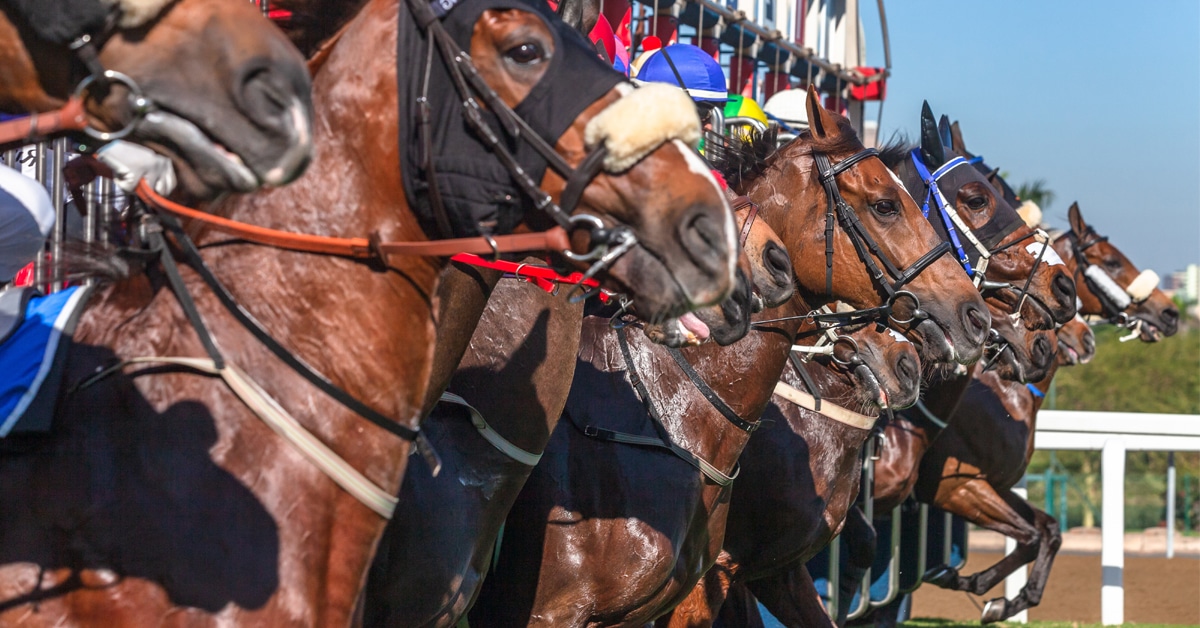
In the world of Thoroughbred horse racing, whenever a foal is born or the drop of a gavel sounds at public auction, breeders and owners are all hoping for the same thing; a horse that will eventually race at the highest levels in the sport. For most, however, that won’t be the case and over 80% of horses will at some point find themselves in the lifeblood of horse racing in North America: claiming races.
For context, Woodbine Racetrack’s most recent condition book offers a total of 161 races over 12 racing days, with 151 of them (93%), being either claiming or optional claiming.
From its inception, claiming races were first known as ‘selling races’, where owners and trainers would enter their horses into races with a set price tag and anyone willing to pay that amount assumed ownership of the specified horse after the race. While the concept has remained very much the same a century later, recent rule changes have been implemented by racing jurisdictions to protect prospective owners from claiming a horse that may be unsound following the race from which it was claimed.
Owners can now check off a box on the claim slip which opts them into inspection of the claimed horse by an association veterinarian approximately one hour following the race. This cool-out period ensures the horse is physically sound before the claim is officially validated.
Competitive Separation
While every owner and trainer dreams their horse will be good enough to compete in allowance or stake races, talent, age, eligible conditions, injuries or wear and tear are all factors that determine which level of racing a horse is best suited to be competitive. While there are many rungs on the claiming ladder, the different levels or claiming prices provide a baseline as to what kind of horse each individual is.
For horses not competitive enough to race in allowance or stake races, racetracks like Woodbine offer maiden claiming races with a bottom price of $7,500 and going up to $40,000, with levels of $10,000, $15,000 and $25,000 in between. Horses who have broken their maiden, but may not have won two or three races lifetime, can find races at those same claiming prices to fit their respective conditions, with the highest claiming price for allowance optional claiming races being $80,000.
Many races have optional claiming worked into their description, with Ontario-sired horses offered the opportunity to run protected in maiden and condition claiming races, without a claiming price attached. Similarly, horses who have started for a specified claiming price at any time within the previous year can also run without a tag in starter optional claiming races.
The key for owners and trainers is to pay close attention to a horse’s past performances and current condition to find the race most appropriate at any given time; one that will give their horse the best chance to be successful.
An Affordable Introduction to Ownership
Claiming races offer owners new to the game a more affordable alternative to purchasing a yearling or two-year-old at auction, an endeavour that can see their purchase take months or even years to make the races. Instead, claiming a horse already at the races provides a quicker turnaround, and with most racing within three to four weeks of being claimed, a new owner gets to see their horse in action much sooner.
A prime example would be that of Michael Langlois. Before his first-ever auction purchase, Paramount Prince, took him all the way to King’s Plate glory in 2023, it was claiming his first racehorse, Magic Spin, two years prior that got his foot in the door and saw him bitten by the ownership bug.
“There’s nothing like owning a racehorse,” Langlois said. “Claiming a horse, you’re right in the action, you know they’re already a runner and don’t have to wait as long as a yearling can take. When we got that first win, it was so exciting that we had tears in our eyes. I was hooked.”
Finding A Fit
Quite often, even horses purchased at auction for high prices may not live up to expectations and bigger outfits use claiming races to move on from stock that may not fit their program, or that bigger-budget owners don’t care to focus on. These horses can often thrive in smaller barns with more individualized attention, often becoming stable stars to owners and trainers that don’t have such deep pockets.
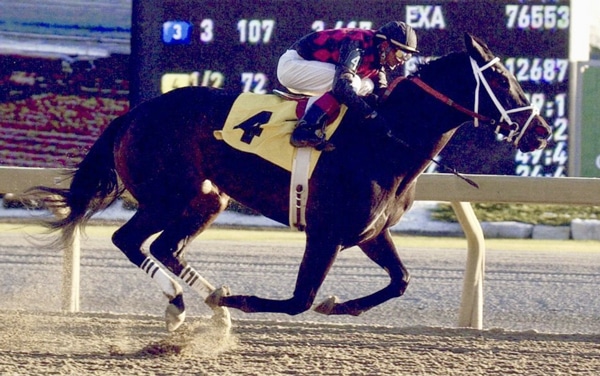
One For Rose was claimed for $40,000 by Sid Attard and went on to be a millionaire. (courtesy Jamie Attard)
Sometimes all a horse needs is a simple change of scenery, or change in routine. Not to say that the previous connections weren’t doing a good job, but like humans, horses have different preferences and a change in training regimen can often give horses a new lease on life.
Over the course of his near half-century career, Hall of Famer Sid Attard has become well known for being a claiming trainer. He claimed three-time Sovereign Award winner One for Rose, Stunning Stag, and Just Rushing early on in their careers, each for $40,000, and each went on to become multiple stakes winners with respective purse earnings over $1,000,000.
With every claim he’s made, he feels that above all else, luck and listening to his heart were the biggest factors.
“When you claim a horse for $40,000, you never imagine they’re going to turn into what those three became,” Attard said. “You look at their breeding, their form, and watch their replays, but when you look at them in the paddock, their body and legs, your heart will tell you whether you like them or to stay away. I try to never go against what my heart tells me about a horse. When you go for one, you hope you might get lucky and win a few races with them. We got very lucky that those three developed into such nice horses.”
Claiming Rules
Claiming rules across Canada vary by province and mandate the minimum price a horse must run for following a claim, what owners and trainers refer to as “Being in jail”. In Ontario, the Alcohol and Gaming Commission of Ontario (AGCO) mandates that a horse must race for 25% higher than the price which they were claimed for a period of 30 days. Alberta and British Columbia rules state that a horse claimed from a race in which it won must race for 25% higher than its claiming price and horses that didn’t win must race for at least the acquired price for a period of 14 and 25 days, respectively. Manitoba has no “in jail” rule currently in effect.
After the stipulated time period, you are free to run the horse for whatever price you see fit, even if it’s several levels below the acquired claiming price.
What Catches Your Eye?
So, what exactly do trainers look for when they decide to fill a slip and take a look at a horse to claim? Do they prefer older horses with back class who have proven they’re a competitive runner? Or do they look for younger horses making one of the first starts of their career?
For William Tharrenos, one of Woodbine’s top 10 trainers by wins in 2025, his system for identifying potential claims relies heavily on research and projecting in what areas you can improve a horse, as well as the appropriate races in the condition book to run them back in.
“The number one thing I do is look at the Rag (Ragozin) numbers,” Tharrenos said. “Beyer numbers fluctuate and I feel they hurt our track, because we race on Tapeta ‒ they don’t give you a fair value at Woodbine. Rag numbers are a little more competitive on the value of the horse. I use Thoro-Graph numbers every day as well. They show you what kind of horses you have to compare to in order to compete at whatever level of racing you’re looking at.”
Ragozin, Beyer and Thoro-Graph numbers are all proprietary speed figure systems horsepeople and bettors use to give them what they feel is an edge when handicapping horses and races. As for what stage a horse is at in their career, to Tharrenos, each has their pros and cons.
“There are two types of individuals you look for in the claiming game,” Tharrenos said. “Younger horses are a little less stressful when you’re running them back off of a claim, as you don’t have to improve them very much. As long as they can compete at the same kind of level, hopefully you can get a win out of them. When you’re claiming older horses, they’re more proven, but you don’t necessarily get a race back because you have to elevate them 25% in claiming price for 30 days. You have to be patient because there isn’t always a spot to run them back in unless you think you’re really going to improve them.”
Tharrenos says he will watch a horse’s previous races, if any, to identify areas of possible improvement.
“I always watch replays to see past performances,” Tharrenos said. “You might see something in a previous race that you can make better, or think a horse might do better on a different surface or at a better distance. You may think you can mature a horse a little better than how you’ve seen them run so far. And obviously there’s some trainers you may want to stay away from, and some trainers you feel that you might be able to improve on.”
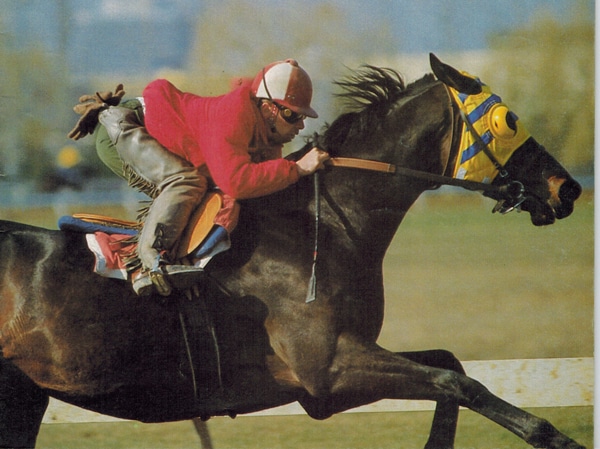
Domasca Dan was a bargain claim for Robert Tiller at $32,000; he won four stakes and close to $600,000 (USD).
By watching replays, inspecting past performances and paying close attention to breeding, owners and trainers look for ways they feel they can improve a horse following a claim.
Perhaps a horse has a lot of turf breeding and has not yet had the opportunity to race on that surface, maybe they feel the horse has been racing at longer than ideal distances, showing early speed but faltering in the late stages and shortening them up would allow them to finish stronger. On the contrary, some horses may be running too short, where the early speed gets away from them and by the time they get their feet under them and are closing the race is over. Stretching this type out may allow for a softer early pace, the horse to be more within striking distance when they’re ready to make their move.
Devil is in the Details
Over the course of his illustrious career, Hall of Fame trainer Robert Tiller has surely enjoyed his share of claiming success. None however, outshine the claims of Domasca Dan and Elated Guy made in the late ’80’s and early ’90’s on behalf of owners Frank DiGiulio and his son Frank Jr.
Domasca Dan proved his claiming price of $32,000 to be a bargain, winning four stakes following his acquisition and close to $600,000 USD in earnings. After finishing third behind 1989 Triple Crown winner With Approval in the Queen’s Plate and second in the Prince of Wales, Domasca Dan’s biggest victory came in that year’s running of the Grade 2 Jamaica Handicap at Belmont Park.
Claimed from his second lifetime start for $40,000, Elated Guy won Tiller and the DiGiulio’s five stake races and over $900,000 USD in purses. Perhaps one of his biggest moments came in 1992 when Elated Guy almost pulled off a 47-1 upset in the Grade 2 Molson Export Million, finishing second, beaten only half a length by fellow longshot Benburb.
Ask Tiller how he turned these former claimers into such great stories, and he’ll tell you it’s all about the little things ‒ and getting lucky.
“It’s a game of details,” Tiller said. “Everyone trains horses, but attention to detail on the track and in the barn are what really makes a difference to a horse’s development. You still have to get lucky and be in the right place at the right time. Talk about getting lucky, when I claimed Domasca Dan it was an eight-way shake.”
A ‘shake’ means multiple owners have submitted a claim slip for the same horse. In this case, a number is written on the back of each claim slip at random and numbered balls are placed into a shaker bottle. Whichever number is drawn from the bottle, the connections of the corresponding slip “wins the shake” and becomes owner of the horse in question.
It’s the attention to detail Tiller speaks of that trainers feel horses may not be getting in some barns, whether they feel a horse needs a lighter or stronger training regimen or simply general care and grooming. While watching their own horses during morning training, trainers can possibly recognize certain horses that are training too strongly, running off with their riders, or too lightly, just jogging or galloping slowly and not getting enough out of their exercise. Situations like these can catch a trainer’s attention and compared to a horse’s recent performance, make them feel a change under their care could produce better results.
On the other end of the spectrum, many trainers are so respected for covering all their bases and doing such a good job with their horses that trainers refrain from claiming off them, feeling that there wouldn’t be much, if anything, to improve.
As horse racing continues to evolve and change, whether you’re a first-time owner, Hall of Famer, or anyone in between, one thing that remains as much of a constant today as it was over a century ago: the important role claiming races play in its everyday function.
The Latest