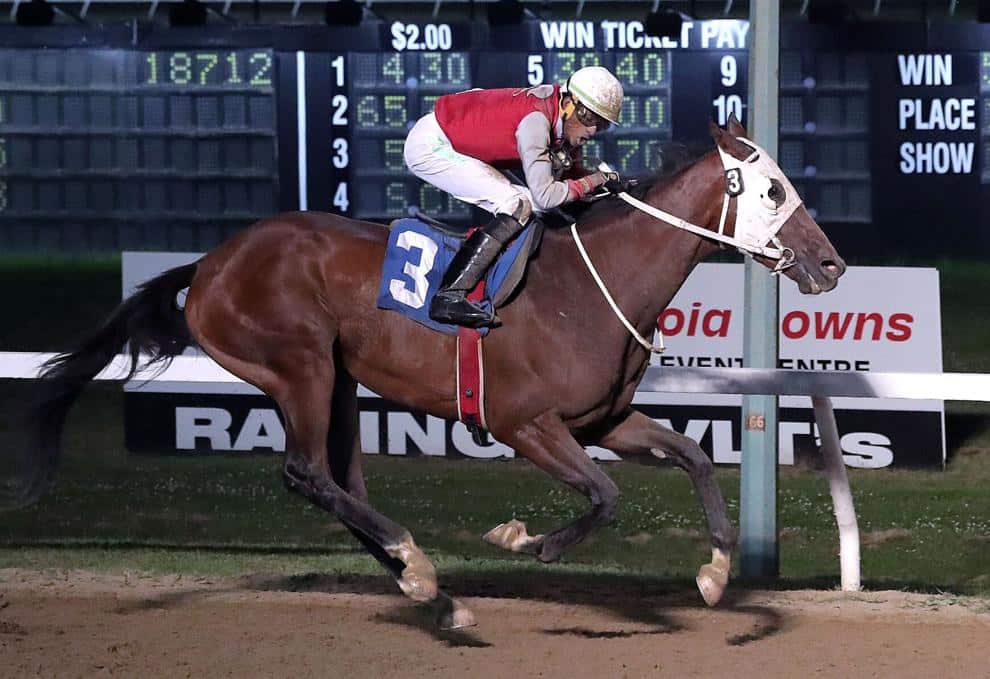
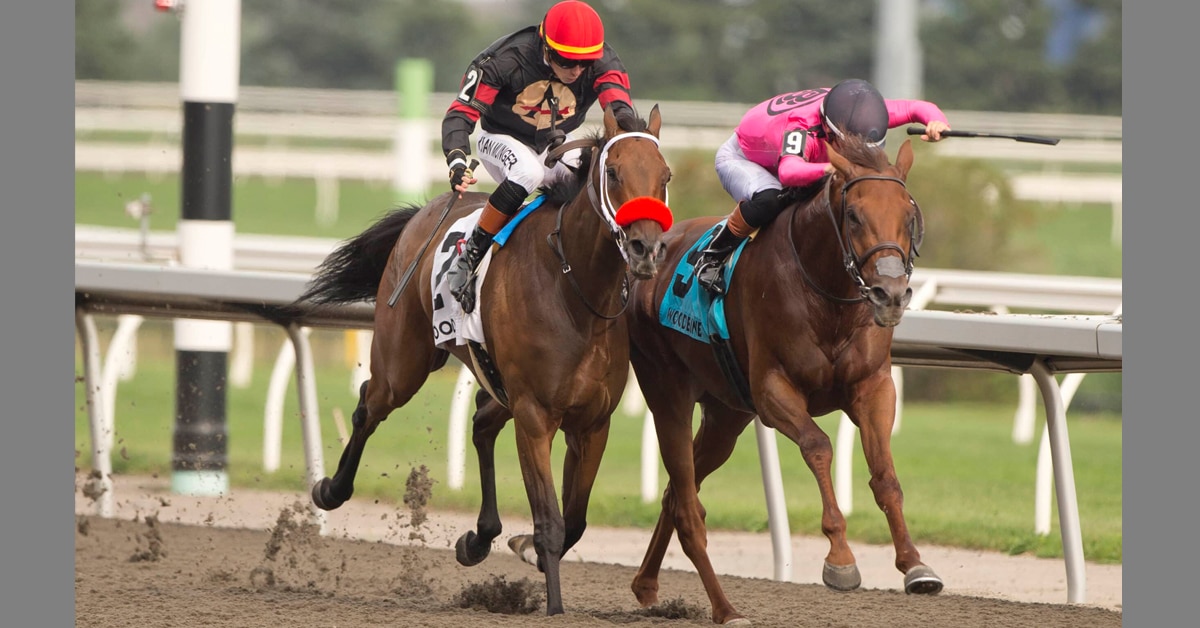
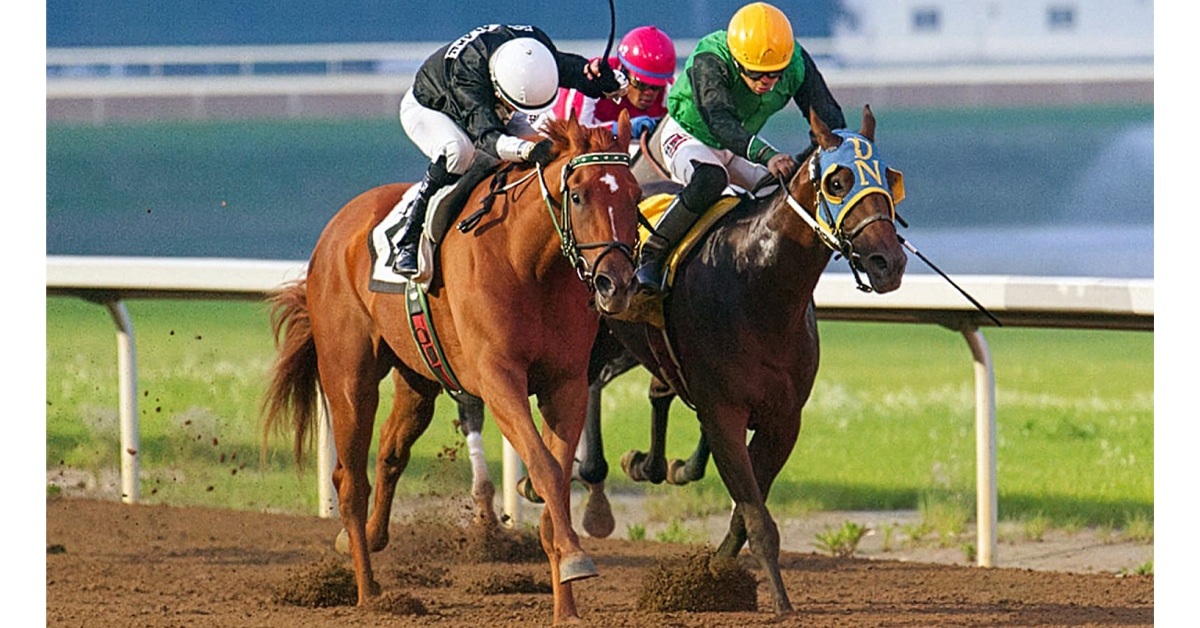
Canada’s second-leading trainer of 2025 and a finalist for the Sovereign Award for Outstanding Trainer, MARTIN DREXLER, will step away from training indefinitely once he starts his last horse at Gulfstream Park in Florida next month. Instead of having his staff set up his barn at Woodbine, from where hundreds of winners emerged, Martin will return to Ontario and plan his immediate future. For now, he will take the remainder of 2026 off from training.
“I’m taking some time off,” said Martin, who came from Assiniboia Downs in Winnipeg in 2008 and rode up the trainer ranks at Woodbine. “It’s a combination of things; the financials of the game make it impossible to make money, and I’m tired. I feel like I haven’t had the drive I need to have to do it at the level I want to.”
Martin has been one of the most important trainers at Woodbine in the last decade, starting some 4,000 horses and bringing in numerous new owners from throughout North America. He recently won his 900th race when Palace View (Ire) won on January 16 at Gulfstream for owner Bruno Schickedanz. For three consecutive years, he has sent out 100 winners or more, a rare feat for a Canadian trainer. But, like many other trainers throughout North America, Martin found it almost impossible to keep up with the costs of feed, bedding, tack, and in particular, staff.
“I think I can speak for every trainer; for what we charge for a day rate versus the costs of the real world (supplies, staff, etc.), it doesn’t add up. My day rate ($110) has gone up about 15 or 20 percent in 15 years, but everything else has gone up 75 percent.”
Hay and straw, once priced at $6 or $7 per bale, are now virtually twice as much. Veterinary costs have skyrocketed, even for an occasional routine check-up. Add in the cost of gas and groceries and a trainer with a large barn can get overwhelmed.
A number of successful trainers at Woodbine have retired in recent years for a variety of reasons including financial feasibility and shrinking stables. They include Norm McKnight, David Bell and Mike Keogh. In the U.S., trainers who have retired or left the country seeking better opportunities include Jimmy Jerkens, Tom Amoss and John Kimmel.
Kimmel, a Breeders’ Cup winning trainer, told Bill Finley of Thoroughbred Daily News about his recent departure from training. “If you are not making significant money through purses or buying and selling horses, there is no way you can offset the cost of doing business… The labor costs, fee costs, the cost of doing business just outweighs what you can charge on a day rate.”
Martin’s horses in 2025 earned about $3.5 million, which, in theory would mean he earned $350,000, or 10 percent. It is only a theory, however, especially if you are not careful about where the money goes.
Each day some trainers may hand out cash for last-minute essentials or a last-minute staff person. At times, a trainer’s own money is being used and doesn’t get replaced. Martin said his payroll per week for staff was upwards of $25,000. “The financials of some of the situations I was in frustrated me. The business model, in particular in the claiming game, has fallen apart.”
Martin praises his owners for being supportive of his decision and said it is just as hard for owners to make money.
“Last year was not a great year for me or my owners, to be honest,” he said. Martin noted that he ended up with a lot of horses racing at the same class level and if races don’t fill, those horses sit in the barn. With the field sizes of races still small, the opportunities to claim a horse your owner wants diminish.
“I don’t like how I feel about racing right now and where it might be heading. It doesn’t matter if you have a small stable or a big one, unless you have someone keeping track every day of how may bags of feed we bought or what we spent at the tack shop, it can all get out of hand.”
Martin said he began thinking about leaving training about a year ago. He praises his assistants Robyn Lewis and Audrey Cheung, but when Robyn left the stable at the end of last year, Martin was reluctant to get going again in 2026.
“I was chasing the numbers and the last three years I wanted the 100 wins and I got them. I am very proud of that. But the stress of game and getting up at 3:15 every morning every day with virtually no days off can get to you.”
Horse injuries, which are part of the sport, are still hard to get over. “Did I do something wrong, did I miss something? Was it the track? I don’t know, but it bothered me.”
The worst one, the last straw as it were, was when his beloved Souper Dormy was fatally injured as he was cruising to the lead in a grass race at Gulfstream last month. “That was devastating to me.”
Most of Martin’s trainees are now in the barns of other conditioners at Woodbine. Kevin Attard, who has a few, has also moved his large stable into Martin’s barn. He will race his last horse at Gulfstream in mid-April and return to Toronto before taking some time to travel and visit family and friends. He has had owners and fellow trainers offer him good luck, but certainly it is a significant blow to an already lean horse population in Ontario.
“I love the sport and I want it to succeed,” said Martin. “And I want to succeed in it. If I do come back, I want to start from the ground up, do it on a smaller scale maybe. For now, I look forward to stopping by Keeneland on the way home and sit down and just watch some races.”
More News