For years, horse racing participants across North America have debated what happens when racetracks become primarily gaming businesses, with racing increasingly treated as an obligation attached to a casino rather than the reason the facility exists.
Alberta is about to test the opposite proposition.
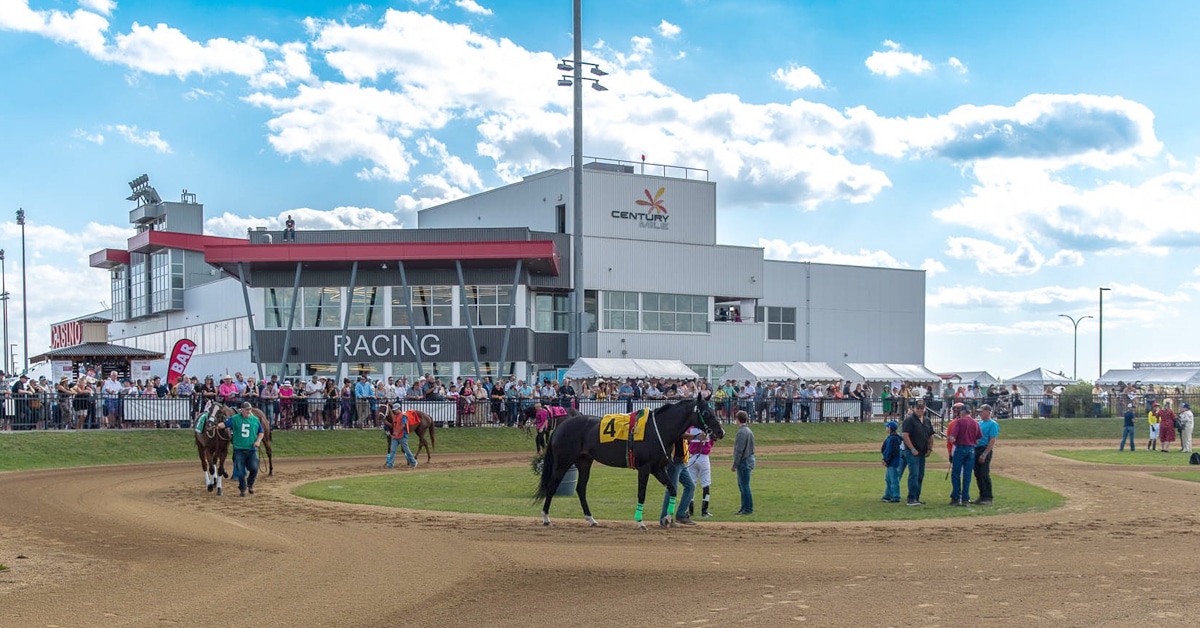
Highfield Investment Group is acquiring Century Mile Racetrack and Casino near Edmonton and Century Downs Racetrack and Casino near Calgary from Century Casinos, putting the province’s two major tracks into the hands of a company whose owner is deeply involved in the racing and breeding industry.
Highfield Investment Group, owned by the Munro family, are longtime Thoroughbred owner and breeders. Adrian Munro is president of the company and also president of the Canadian Thoroughbred Horse Society’s Alberta division and past president of the National division. The company has more than four decades of experience investing in and operating businesses across real estate development, land management, hospitality, energy services, and agriculture. Rather than acting simply as a passive investor, Highfield says it typically takes an active role in managing its holdings, with Adrian overseeing joint ventures, land assets, commercial and industrial properties.
In addition to the corporate work, the Munros’ Highfield Stock Farm near Okotoks has become one of Western Canada’s leading Thoroughbred breeding operations, that also owns and races horses in the US and Canada. That combination of investment, property development, hospitality and hands-on racing experience gives Highfield an unusually broad base of expertise for taking over Alberta’s two main racetracks.
For Adrian, the acquisition is not a sudden move into horse racing. It is the culmination of an involvement with Alberta racing that stretches back more than 20 years.
Highfield was involved with United Horsemen of Alberta, which won the original 2004 request for proposals to develop a new racetrack in Calgary. When that effort later ran into financial difficulty, Highfield acquired its debt and helped keep the gaming licence alive while land was sold and a new operator was found. That ultimately led to Century Casinos entering the Alberta market and opening Century Downs in 2015. Century Mile followed in 2019.
When Century began evaluating asset sales as it sought to reduce debt following an aggressive U.S. expansion, Adrian said Highfield wanted to ensure the Alberta tracks did not simply move from one gaming company to another.
“I wanted to make sure that there was a horseman involved in the process, so that we knew we weren’t going to be in a position where a casino company would come in and buy the [casinos and tracks] and look to decouple racing from the casinos. This is not what we want for the industry.”
Highfield entered the sales process and was granted exclusivity in February. Since then, it has been working through due diligence and negotiations with Century and VICI Properties, which owns the underlying real estate.
Adrian’s new role also creates an unusual overlap as president of CTHS Alberta, as well as an active breeder and owner whose company will now operate the province’s two major racetracks. Adrian said he disclosed Highfield’s involvement to both the Alberta and National CTHS leadership early in the process and offered to step down. The bylaws were reviewed with legal counsel to ensure he could hold both roles, and both boards unanimously asked him to remain.
Racing moves back to centre stage
Adrian is careful to credit Century for what it accomplished in Alberta. Century invested heavily in the province, first bringing Century Downs into operation and later constructing Century Mile. Paul Ryneveld, who will oversee Highfield’s Racing Entertainment Centre operations and previously spent nearly a decade running Century Downs, estimated Century invested a little over $100 million in the two facilities.
But Century is fundamentally a casino company, and Adrian believes that inevitably affected priorities.
“Century did a great job. Alberta owes them a debt of gratitude,” he said. “But their limitation is they focus a lot on the casino operations, which is their core business. They’re very good at it, and sometimes racing kind of gets put to the side.”
Highfield intends to change that balance without pretending racing can survive independently of gaming.
“The casino makes horse racing viable, and we want to leverage that to put money back into the industry and into horse racing, so we can grow horse racing,” Adrian said.
That distinction is central to Highfield’s strategy. The company is not treating the casinos as incidental to racing. Adrian describes them as the economic engine that can make greater investment in the sport possible.
The first changes may be relatively basic. At Century Mile, Adrian singled out longstanding drainage problems in the backstretch that can leave horses and workers moving through deep mud after rain or snow. Highfield intends to address those conditions as soon as weather permits.
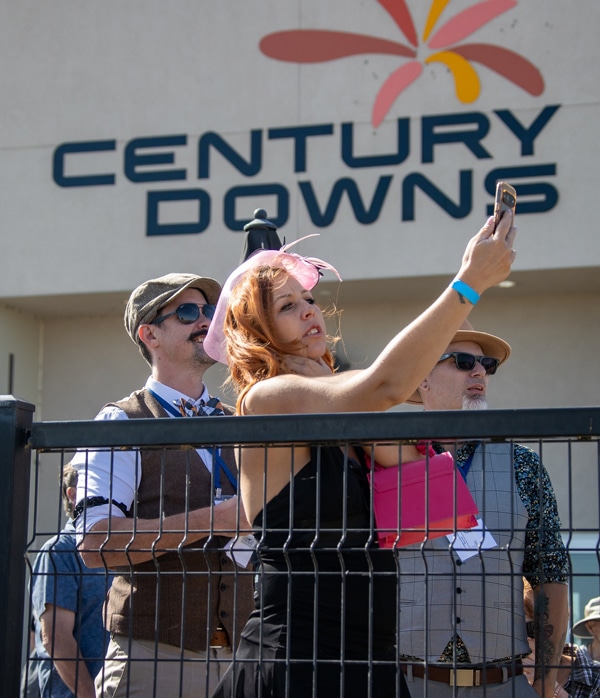
As part of a complete brand overhaul, Century Mile and Century Downs will both be getting new names.
Ryneveld said the larger shift will be about transparency and culture. Horsemen’s associations will be treated as partners rather than outside organizations to be managed at arm’s length. Something as simple as calling a trainer instead of texting to explain why they received 12 stalls instead of 13, he said, can change the relationship between participants and management.
“Transparency comes from sitting down with people,” commented Adrian. “One of the things we’re going to do as a management team is sit down with people and listen to what they’re saying because their input is valuable. They might not always like the answer, and we might not be able to change what they would like, but we’re going to be transparent and have open communication and dialog.”
Highfield also plans a substantial new marketing effort aimed at rebuilding racing’s audience, promoting horses and participants, creating event days and working more closely with wagering partners. Adrian believes racing lost much of that focus as casino operators became more prominent.
“We lost the focus on marketing the equine athlete and figuring out a way to draw bigger crowds. We lost the focus on creating handle across all the spectrums we have, whether it’s on-track, simulcast, or people betting on our product from other jurisdictions.”
As an example, Adrian pointed out that Alberta racing has not maintained its relationship with HPIbet, Canada’s major advance-deposit wagering platform, to better promote Alberta racing nationally and develop wagers capable of bringing more money into local pools. The challenge is becoming more urgent as Alberta’s regulated online sports-betting and iGaming market expands, increasing competition for wagering dollars. Adrian believes racing needs to be more aggressive about distribution, promotion and partnerships, including working more closely with HPIbet on major race days and developing products such as cross-country wagers that can expose Alberta racing to a broader betting audience.
Century Mile and Century Downs will also get new names.
The Century branding cannot continue after the change in ownership, and Highfield is working with outside professionals on a complete brand overhaul, including names, logos and visual identity. Dawn Lupul, who is joining Highfield as director of marketing, said the rebrand provides an opportunity to signal a broader cultural reset.
Alberta already has money going back into racing
Highfield is stepping into a province where racing still receives substantial institutional support. Hores Racing Alberta (HRA) is supported in large part by Alberta’s Racing Industry Renewal Initiative, which awarded $16.1 million in purse grants to HRA in 2025 and another $5.1 million through its Breed Improvement Program. Of that, Thoroughbred racing received approximately $6.87 million in purse support and $2.83 million in breed improvement funding. HRA also provided $26.6 million in racetrack funding during the year.
HRA’s own strategy closely mirrors the issues Highfield says it wants to address. Its 2025-2027 business plan calls for increasing the racehorse population, optimizing race dates, increasing purses and field sizes, attracting new owners and improving marketing. It also specifically targets breed improvement programs to increase foal production and procurement incentives to bring more horses into Alberta.
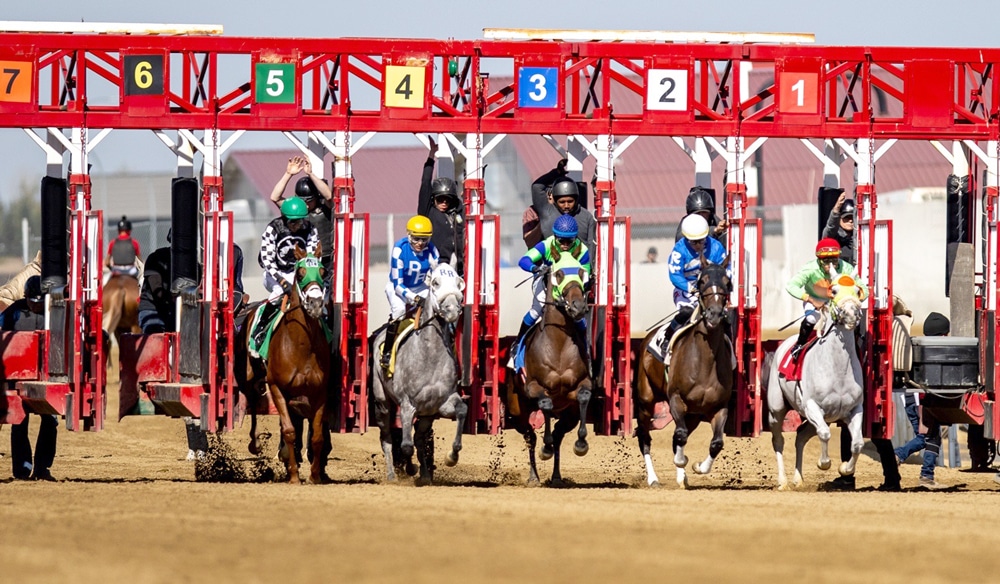
As Alberta’s regulated online sports-betting and iGaming market expands, competition for wagering dollars is increasing. Munro believes racing needs to be more aggressive, and should be working more closely with HPIbet on major race days.
Alberta, like every other racing jurisdiction, needs these initiatives to boost the industry. Alberta’s registered Thoroughbred foal crop has fallen sharply over the past two decades, as has the number of active Alberta stallions, the number of Alberta-bred starters, and the field size.
That makes horse supply one of the central challenges facing Highfield. Ryneveld would eventually like to see Alberta’s main Thoroughbred racing program grow from approximately 53 race days to about 75, while Standardbred racing could potentially add another 10 days. But Adrian stressed that additional dates only make sense if the province has enough horses to fill races.
“We need horse population like every jurisdiction, so we need to work with HRA and the horsemen’s groups to create programs that get people to buy horses to bring into this jurisdiction to run,” said Adrian. “You can have more race dates, but five horse field don’t do anyone any good. You’re just spending money and not getting inflow into the industry. You need to increase the horse population.”
Rebuilding the supply of horses
That effort is already underway. The CTHS Alberta division has introduced a suite of incentives aimed at attracting mares, increasing foal production and getting young horses to the races.
Dawson Guhle of CTHS Alberta said the province’s breeder bonus paid 25 per cent on qualified earnings last year, while its Alberta-bred owner bonus paid 35 per cent. Neither is capped. The Maiden and Open Mare Program has been particularly effective.
“The Maiden and Open Mare Programs have resulted in over 65 live foals in the last two years,” Guhle said.
Alberta’s Mare Purchase Program reimburses a portion of the purchase price of mares bought outside Alberta, encouraging breeders to bring new bloodlines into the province. Guhle said that initiative has attracted roughly five or six Kentucky mares annually in recent years.
A newer Two-Year-Old Development Program pays $1,500 when an eligible Alberta-bred makes its first start, helping offset some of the cost of getting young horses through training and into the starting gate.
For Guhle, Highfield’s acquisition could strengthen those programs by improving confidence in the racing side of the equation.
“It will help draw more owners and investment into the industry, which in return is going to improve the quality of horses that people in Alberta are breeding,” he said.
Growth before higher purses
Horse people should not expect Highfield to arrive and immediately increase purses.
Adrian said the first job is to increase the overall economic pie, through casino activity, live and simulcast wagering, better promotion and stronger relationships with advance-deposit wagering platforms.
HRA recorded total provincial pari-mutuel handle of $88.1 million in 2025, up from $83.7 million the previous year.
Ryneveld said Century Mile currently averages roughly $400,000 to $500,000 in handle per Thoroughbred card outside major outlier days such as the Canadian Derby. His longer-term ambition is to approach $1 million per card during the summer and to produce sustained double-digit handle growth.
In five years, he would like to see substantially more racing, larger purses and considerably higher wagering.
“If we were racing in five years for the same purse amount, then we’ve actually gone backwards,” he said.
Highfield also intends to publish key performance measures so horse people can see whether the business is actually moving toward those goals.
More than an urban entertainment business
The stakes extend beyond the racetrack. A 2019 economic impact study commissioned by HRA estimated that breeding, raising and racing generated approximately $312 million in economic activity in Alberta and supported 1,506 full-time-equivalent jobs. When owners and unpaid labour were included, nearly 4,800 people were involved in the industry.
The study also found that 65 per cent of the total economic impact occurred in rural Alberta, reflecting the industry’s agricultural base. That agricultural link is particularly important for Highfield, whose racing interests span breeding farms, sales, ownership and competition.
Guhle sees that breadth as one of the acquisition’s biggest advantages.
“It’s very exciting that the group coming in to purchase the track understands racing at every level,’ said Guhle. “We’re very, very lucky in Alberta to have a group that’s operating the track that knows racing from the breeding shed to the backstretch. It’s going to be extremely exciting just to see that group come in help push the industry forward and drive, drive growth in Alberta.”
Growth & investment in Alberta
For all the talk about putting horse people back at the centre of the business, Adrian stresses that Highfield is approaching the acquisition as an investment, not a passion project.
“Highfield would not be getting into this if we didn’t think it was financially viable,” he said. “It did start with the numbers.”
But once those numbers worked, the opportunity became larger.
Highfield now has a chance to test whether a profitable racino can also operate as a racing business whose owners see breeders, trainers, owners, bettors and horses as central to the enterprise rather than ancillary to it.
For Alberta racing, the next few years will show whether that difference in perspective can translate into more horses, fuller fields, higher wagering, more race dates and ultimately more money flowing back through the industry.
“I think it really situates Alberta for growth in the future, and I’ll bring in the right team and we’ll do the right thing for the industry overall. Incremental growth is what we’re going to be about along with transparency and creating a vision for growth. I’m excited about the opportunity.”
The Latest