~ This article originally appeared in the 2025 Sire Book.
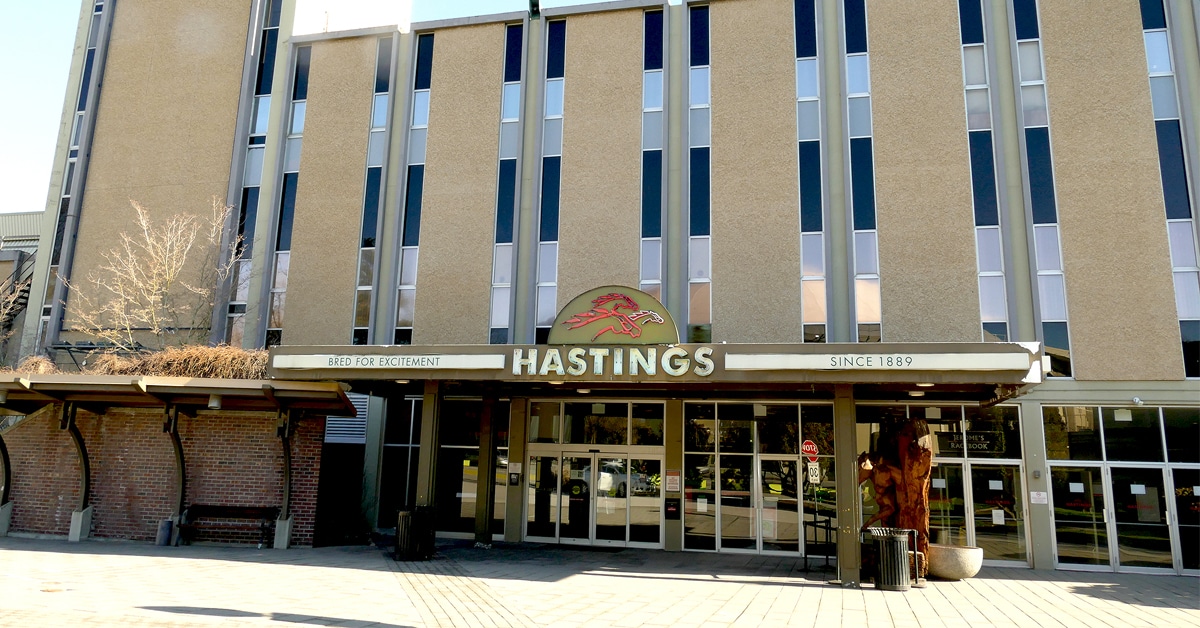
When Great Canadian Gaming Corporation (GCG) purchased the lease of Hastings Park in 2004, a company spokesperson at the time said that they wanted to “bring the prestige and the fun back to racing,” but 20 years on, that vision has never been realized. While it’s true that the business of racing in the US and Canada continues to face challenges, it’s particularly acute in BC where the feeling on the ground in BC is of frustration over a failing business.
THE POT OF MONEY IS DWINDLING
The province set up the Horse Racing Industry Management Committee (HRIMC) ‒ comprised of a representative from the B.C. Lottery Corporation, one representative each from Standardbred and Thoroughbred breeders, a GCG representative, and two government officials – to oversee the various sources of revenue for the horse people. The group collects all the money in one pot and then redistributes it according to the terms of the contract. Currently, GCG gets 43.2% of the money for hosting races at Hastings and Fraser Downs, and Thoroughbred and Standardbred racing get 33.6% and 23.2%, respectively. The Thoroughbred portion is further split, with 90% going to racing to support purses and 10% going to the breeders to fund awards and other initiatives. The revenue comes from three main sources: the handle, the slots, and the Pari-Mutuel tax.
The horse people get a share of the handle which is collected by The Betting Company Teletheatre BC (TBC), a private company set up as a partnership between Fraser Downs, Hastings Racecourse, the Horsemen’s Benevolent & Protective Association, and Harness Racing British Columbia. In 2011, the income from betting on horse racing was $23.5 million, but by 2014 it had declined to $18 million and is now at just $9 million.
Slots opened at Hastings in 2008, and the province set up a slot revenue sharing scheme with the horse people in 2011 offering 15% of the province’s share of the slots. This amounted to $6 million, which the province topped up with a $4 million grant. In 2015, to streamline payments, the province opted to increase the amount of slot revenue it shared with horse people to 25% and discontinue the grant. These terms worked well for the industry for several years, with HRIMC receiving even more money, about $11 million annually. But since COVID, the slot revenue has declined significantly and the horse peoples’ share is now just $9 million.
The government also collects a Pari-Mutuel tax which amounts to about $3 million/year. Of that, the government keeps $2 million to fund the Gaming Policy and Enforcement Branch and gives the remaining $1 million to the HRIMC.
When the arrangements were first set up 12 years ago, the total pot was about $33.5 million ($10 million from slots and $22.5 million from the handle, and $1 million from PMTR), but that has decreased to $18 million in 2024 (with $8 million from betting and $9 million from slots, and $1 million from PMTR). Horsemen are disappointed that the slot agreement did not stipulate a base funding amount, nor did it include standard increases for the cost of living. All this has led to the race industry getting less and less, while having to rely on partners who are not committed to their future.
THE SLOTS
Woodbine Entertainment Group purchased the lease of Hastings from the Pacific Racing Association in 2002, only to sell it two years later when they were unable open tele-theatres or to get the Vancouver City Council to approve slot machines on the site. Great Canadian Gaming, which already had a relationship with the province, purchased the lease from Woodbine, and later that same year were able to convince the Council to approve 600 slots which opened in 2008 after a contentious court battle with local residents.
There were signs shortly thereafter, however, that all was not well. In 2011, GCG wrote off $46.8 million of its Hastings assets and another $4.4 million in 2012, leaving a small amount on their books for the value of the gaming license. The slots were not nearly as lucrative as had been anticipated, delivering just $1.288 million to the city in 2011 instead of the $6.5 million that the city had expected.
Fast-forward to Vancouver’s 2023 Year End, and a city report reveals that just 75% of the slots Hastings are permitted to host are operating and they delivered just $996,000 of gaming revenue to the city.
Over the years, GCG has not been the best partner to the industry. One glaring incident was when they failed to fix the toteboard on the track for several months. They have also tried (and failed) to charge horsemen for extra days of racing and to rent stalls on the dilapidated backstretch. Industry insiders say that the company continues to complain they don’t make any money on racing, but refuse to invest the necessary funds to improve facilities to attract new and more customers. GCG was contacted for comment, but did not reply.
One might think that slot games are simply not popular in Vancouver, but there are two casinos within six km that are much more successful. Parq Casino opened in 2017 and is a $700-million complex with two luxury hotels and a large casino space featuring 600 slot machines and 75 table games. While Parq is permitted table games and Hastings is not, all 600 of Parq’s slot machines are operating, along with 61 of 75 permitted table games, delivering $6.2 million to the City of Vancouver in 2023. Even closer to Hastings is one of Canada’s largest casinos, the Grand Villa Casino Hotel & Conference Centre in Burnaby, which has 1,300 slot machines and 67 live table games sending $11 million to Burnaby coffers in 2023, plus an additional $783,555 in municipal taxes.
There are 36 casinos in BC, and Hastings’ is likely the least popular and certainly pales in comparison to its two larger and newer neighbours. Efforts to promote and expand have largely been hampered by the City of Vancouver, which does not permit GCG to put up signage on local roads to promote the location which is tucked away in the basement of the Hastings’ building. In addition, the city charges racetrack attendees for parking. While owners and box seat holders do have a small designated lot, the rest of the fans must pay $18 to park – not at all common at any racetrack in North America. In May, however, the City of Vancouver voted to approve expanded slots and table games at both Parq and Hastings, though details and how much and when are not yet available.
THE IMPACT
The dwindling revenue has directly impacted the horse people through lower purses and fewer breeder awards. In the last 20 years, this has caused the purses to fall 58%, the number of breeders to decline by 63%, and the BC foal crop to plunge almost 80%. While other provinces and states have also experienced declines, the ones in BC are much worse by almost every measure.
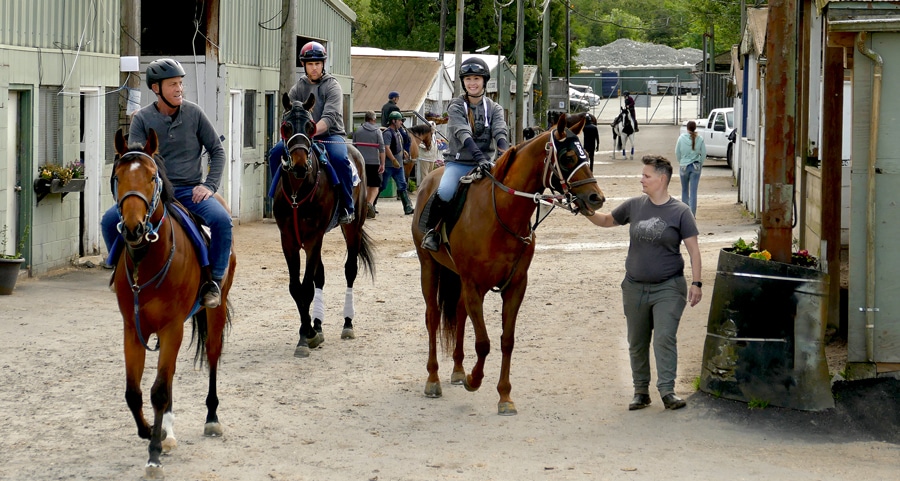
The impact is felt most keenly by the dedicated horsemen who breed the horses. Breeding horses is a big investment that takes years to realize, but increasingly many are choosing not to because the future of the sport in the province is so precarious. As a result, there are fewer and fewer horses in the province, leading to smaller field sizes and races that don’t fill. A local supply of racehorses is critical to field full races, which drives the handle that supports the industry.
(Allen de la Plante Photo)
“Breeders get zero support,” noted CTHS-BC director Jamie Demetrick, listing off his top concerns. “There is only one restricted BC-bred race all year. The Sales Stakes are open to US and Canadian-breds. There are no sales incentives or support to keep BC-breds in the province.”
Before his sudden passing in October, Dairen Edwards was the President of the CTHS-BC and the leading owner in BC while being a passionate horsemen and breeder. He shared Demetrick’s concerns about the declining horse population and what they would mean for the industry.
“Where are you going to get the horses from? It’s not going to be money in the end, it’s going to be a horse population thing [that ends racing in BC]. The horse population isn’t high enough, so to make a race go so you have the boys running with the girls and you have a race with five horses where three are from the same owner. It’s not ideal for anyone.”
Edwards went on to explain that an owner with multiple horses in a race can send one out to take the lead and tire the field so the other two horses can overtake them at the end to finish first and second. “Running a horse where you come in third, fourth or fifth every time doesn’t pay the bills. Many with a small barn can’t do it anymore. They don’t get the races, they don’t have the purses, and the incentives got cut. It’s a triple whammy.”
THE SOLUTIONS
It’s obvious that horse racing in the province needs more money if it hopes to survive, to the tune of about $20 million. Beyond that, it also needs the government to be a better partner by doing more to support an industry that employs hundreds of people and has a $260 million economic impact in the province.
“The biggest problem is the money,” commented HRIMC member Ole Nielsen “If you inject three times the money, people will go out to get horses.”
As one of the main sources of revenue, the declining handle must be addressed. Handle is driven by field size, but Hasting’s averaged just 5.7 in 2023, which is well below the Canadian average of 7.2 and US average of 7.4 and is not sustainable. Higher purses to attract owners and better incentives for the breeders of BC-bred horses are necessary to rebuild the industry.
The province compensates horse racing for cannibalizing its product by sharing their portion of the slot revenue with the horse people. The government received $36 million from GCG for hosting the slots at Hastings and shares 25% of that with the horse people, but that share needs to increase. Importantly, horse racing does not benefit from slots hosted at any other casino, even though these facilities are also cannibalizing horse racing. The government must recognize that all gambling activity has a negative impact on horse racing, which is not able to innovate because of provincial control. At the municipal level, the city of Vancouver collects $1.78 million in operating fees from Hastings, which currently funds the Hastings Park/PNE master plan. Instead, the city could direct this money to the HRIMC to invest in badly-needed backstretch improvements. Further, they could relax their by-laws to allow more signage to better promote the facility.
For their part, GCG could invest in the facilities at the track to make them more appealing. Apollo Funds purchased GCG in 2021 and their stock price is currently at an all-time high, having increased by more than 180% since the purchase. The decline of the slots revenue can be attributed to Hastings’ casino being less desirable than neighbouring venues. Professional sports teams regularly invest in new arenas to attract a wider audience; racing should be no different. The casino operator should be required by the province to make more improvements more regularly to entice a wider audience.
“The province could help by giving racing more revenue, and Great Canadian could help by running a better show,” noted Nielsen. “We meet with Great Canadian and they are trying to do things, but are they trying hard enough? Horse people would be able to put on a better show with larger fields if there were incentives for local breeders to breed and buy more horses.
“The bottom line is that the deal with the province needs to be reworked,” concluded Nielsen. “We need to work with the provincial government and our landlord, the City of Vancouver, to figure out a way to generate more revenue for the industry in order to remain viable and ensure the continued employment of hundreds of people and the future of racing in BC.”
***
In a recent development since this article was written, plans were announced to build a new Vancouver Whitecaps FC soccer stadium at the Pacific National Exhibition fairgrounds, where Hastings Racecourse is located. More details here.
The Latest