A tough, talented mare gave one British Columbia family far more than winners. She gave them friendships, memories and a connection to the racing community that lasted nearly 20 years.
Every horse has a story, but a horse’s life is rarely hers alone. From the breeder who watches her take her first steps to the trainers, grooms, riders and owners who shape her career, a Thoroughbred passes through many hands. Along the way, she brings people together, sometimes for a season and sometimes for a lifetime. For the Johnson family of British Columbia, that horse was My Special Angel.
Angel was talented, powerful, stubborn and occasionally unpredictable. Karen Dittloff of Maple Grove Stock Farm, who has bred Thoroughbreds for more than 50 years, described her simply: “My Special Angel is the most unique mare I have ever worked with.”
Dittloff often referred to Angel’s “halo.” On some days, she said, it was slightly tilted, tarnished or missing altogether. Yet behind the mare’s formidable personality was an animal who would connect generations of one family, preserve the memory of cherished friends and produce horses who carried those relationships forward.
The Beginning of a Family Story
My Special Angel was born April 12, 2005, at Red Rock Farm near Westwold, British Columbia. Bred by the Talbot family, she was by Finality out of the Regal Remark mare Excited Angel. She entered the 2006 Canadian Thoroughbred Horse Society British Columbia yearling sale as Hip 126.
Ken Johnson was looking for a horse to race at Hastings Racecourse. His son had narrowed the catalogue to a few prospects, including two chestnut Finality fillies from the Red Rock Farm. The family’s first choice sold for $26,000. When Hip 126 entered the ring later in the sale, Ken had become more determined to buy her with every glass of red wine. The hammer fell at $25,500.
For Ken, buying a racehorse was never just a business decision. He loved the horses, the people and the stories that surrounded racing. One of his favourite parts was choosing a name and was inspired by the filly’s dam, Excited Angel, and the 1957 song, so chose My Special Angel.
She was broken and prepared at the Clyde family’s farm, beginning Angel’s racing journey with Doug and Terry Clyde and Mike Anderson that would remain part of her story for years.
The Johnson family had first become involved in racing because of Ken. In 1978, sitting in his favourite chair at home, he announced that the family should buy a racehorse. Most of them laughed, but Ken was serious. Before long, nine family members and friends had each contributed $500 to claim a horse. Their stable’s first winner, Dawn Duster, crossed the line on a rainy night in April 1979. Brian Johnson was the jockey and Doug Clyde was the trainer.
Nearly three decades later, it was Doug whose advice the family trusted when they purchased Angel. That was how racing worked for the Johnsons. One horse led to another. A trainer became a family friend. A sale became a tradition. The horses were always at the centre, but the relationships were what endured.
A Mare With Speed and Determination
Angel began her racing career at Hastings as a two-year-old in 2007. She finished third in her first two starts and was beaten by only a nose in her third. She broke her maiden on September 2, drawing away by 4 1/2 lengths as the odds-on favourite.
Her most memorable performance came in the $100,000 Sadie Diamond Futurity. The field included Dancing Allstar, a brilliant filly who had already travelled from Hastings to Woodbine and won the My Dear Stakes in track-record time. Dancing Allstar won the Sadie Diamond by 6 3/4 lengths, but Angel finished second, ahead of several accomplished fillies. Although she did not win, it may have been the finest performance of her career.
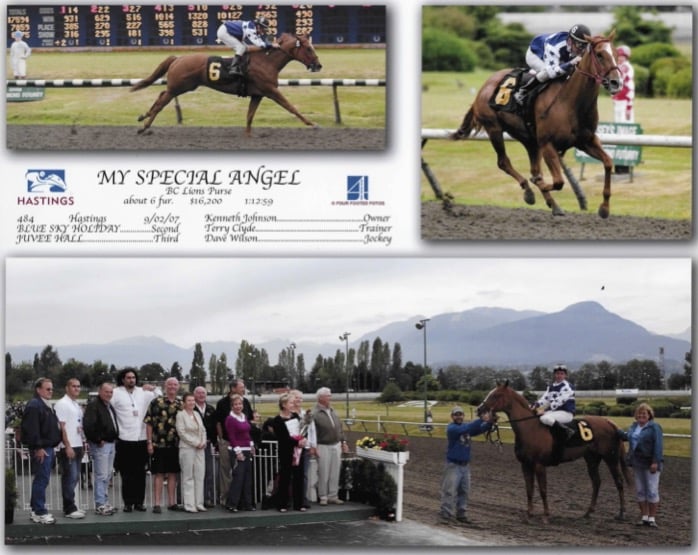 Angel’s three-year-old season began badly when she broke through the starting gate and finished last. Less than a month later, the wagering public dismissed her at almost 43-1. She responded by winning a 6 1/2-furlong allowance race by a nose, returning $87.90 on a $2 wager.
Soon afterward, Dancing Allstar’s owner, Bahadur Cheema, offered $50,000 to purchase her. Ken accepted, although his wife, Sharon, was deeply unhappy to see the mare leave. Angel was sent to Woodbine, where she moved through several barns in the claiming ranks. She won three races with jockey Jim McAleney and changed owners repeatedly.
Through it all, Sharon followed her progress.
When Angel was entered for a $20,000 claiming price at Golden Gate Fields in California, Sharon pushed Ken to bring her home. The mare returned to the Johnson family through the claim box for the fourth and final time. She raced four more times before retiring in 2010 with five wins, three seconds and two thirds from 19 starts, earning $115,529.
She had not become a champion or a stakes winner. But by returning home, she began the part of her life that would matter most to the family.
The Mare at the Centre
Angel began her broodmare career in 2011, and she approached it with the same forceful personality she had shown on the racetrack. She accepted a stallion only when she decided she was ready. She foaled with little difficulty but preferred to do so without an audience. In a field with other mares, she was content as long as everyone understood that she was in charge.
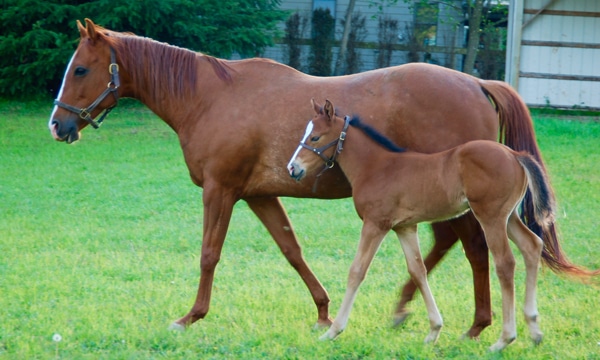
My Special Angel with her first foal, Too Much Johnson (Mac). (photo courtesy Mark Johnson)
As a mother, she was capable but never sentimental. She cared for her foals without fuss and showed little concern when it was time for them to be weaned.
She produced 10 foals, nine of whom raced. Those foals carried Angel’s influence into new barns, new ownership groups and new racing communities. Each one created another circle of people connected to the Johnson family through the mare.
Her first foal, Too Much Johnson, won six times during a 40-race career that took him from Hastings to Arizona and New Mexico.
Her second, B C Charlie, became her first stakes-placed runner. He finished second in the BC Cup Stellar’s Jay Handicap and third in the CTHS Sales Stakes. Trainer Harold Barroby later remembered him as “a hard trying type with some real ability.”
Other winners followed, including Mr. Finch, Miss Earl and B C Christie.
The names themselves became a way of keeping people close. Miss Earl was born on April 10, 2017, the same day Doug Clyde died. Doug had been the family’s trainer, adviser and Thoroughbred confidant for decades. His middle name was Earl, and the filly was named in his honour. In 2019, Sharon Johnson died following a stroke. The next spring, Angel produced a bay filly by Counterforce. The family called her Mabel, after Sharon’s middle name, a name Sharon herself had never particularly liked but would have found amusing. The filly raced as B C Christie.
Ken died in July 2020. He had spent more than 40 years enjoying racing and the community that came with it. He was known for holding court at Hastings, inviting people to join him for a drink, a joke or a horse story.
Angel remained after Ken, Sharon and Doug were gone. She was a living connection to all three. Every foal, sale and trip to the racetrack offered another reason to tell their stories and remember how the family had come to racing in the first place.
An Extraordinary Afternoon
Angel’s greatest success as a broodmare came late in her life.
Her 2021 Counterforce colt, Diocles, developed into a consistent and courageous stakes performer. As a two-year-old, he placed in three stakes at Hastings.
At three, he began a rivalry with August Rain, one of the best horses of his generation in British Columbia.
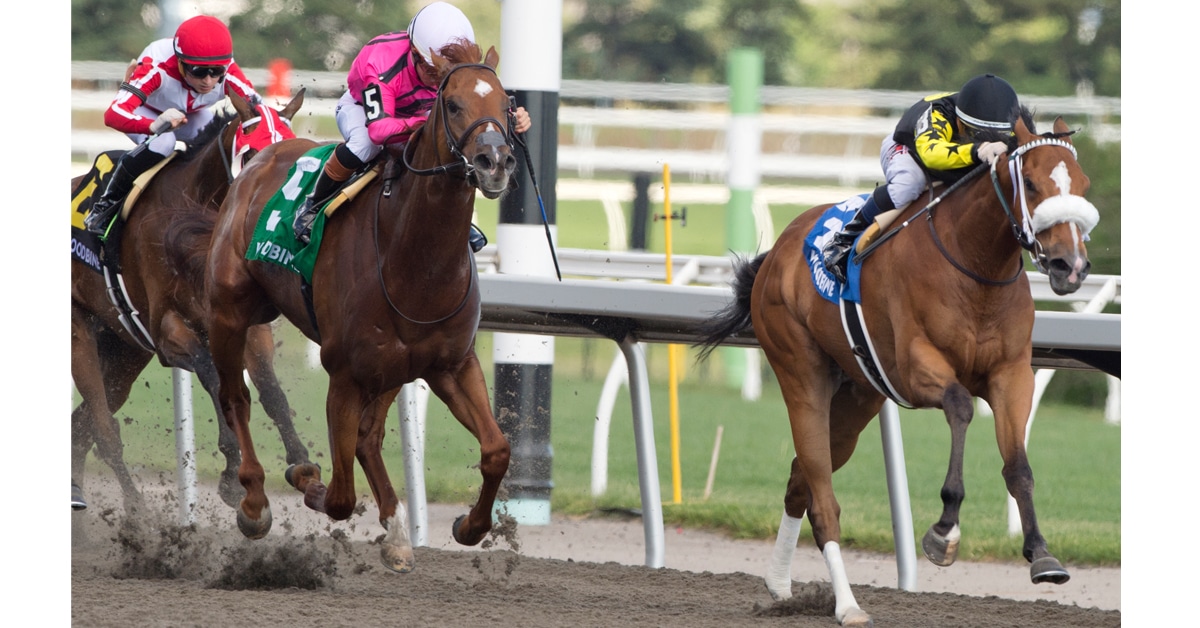
After losing the Chris Loseth Stakes to August Rain by a nose, Diocles earned his first stakes victory in the 2024 Winston Churchill Derby Trial Handicap. Coming from the back of the field, he found a path between horses and won by a head under Kerron Khelawan. It made him Angel’s second stakes winner, but only by a few hours.
Earlier that afternoon, Angel’s two-year-old daughter Breezin Brianne had won the BC Cup Debutante Stakes by 8 1/4 lengths. Breezin Brianne, a daughter of Bakken, had won her debut in front-running fashion. She later added the CTHS Sales Stakes, again leading from gate to wire.
For years, Angel had produced winners and stakes-placed runners without producing a stakes winner. Then, on one afternoon at Hastings, two of her offspring won stakes races on the same card. It was a remarkable achievement for the mare, but the significance went beyond statistics.
Two sets of owners, trainers, riders and supporters gathered in the winner’s circle because of her. Family members and old friends had another reason to celebrate together. A broodmare standing miles away had brought all of them to the same place.
Diocles continued to improve. In July 2025, he defeated August Rain by 1 1/2 lengths in the Lieutenant Governors’ Handicap, completing 1 1/16 miles in 1:42.62. Later that season, he finished second in the Fall Classic Handicap.
Angel’s final surviving foal, a Bakken colt named Woodrow, sold for $40,000 at the 2025 CTHS Alberta sale, the fifth-highest price of the auction. Her last runners appeared to be her best.
The Final Loss
Angel’s own dam, Excited Angel, was reportedly still healthy at Red Rock Farm at the age of 32. It seemed possible that Angel might continue producing foals for several more years.
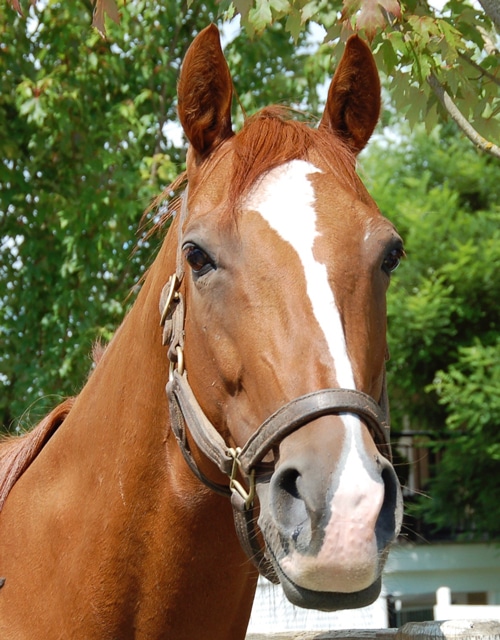
My Special Angel.
In early 2025, she was moved to Alberta. With the future of racing in British Columbia increasingly uncertain, having an Alberta-bred foal offered greater opportunity.
Angel was due to deliver her 11th foal in May. On Kentucky Derby Day, the family received a devastating call. Angel had somehow cut a major artery in her chest and bled to death. Her unborn foal could not be saved. She was 20 years old.
Her loss was painful on its own, but it came during an equally difficult period for the community that had shaped her life.
Later in 2025, it was announced that Thoroughbred racing would end at Hastings Racecourse after more than 130 years in Vancouver. Angel’s story had unfolded against the backdrop of that racetrack. She had raced there. Her foals had raced there. The family had celebrated wins, endured losses and built friendships there. The impending loss of Hastings made Angel’s death feel like the closing of another chapter. Yet neither story ends completely.
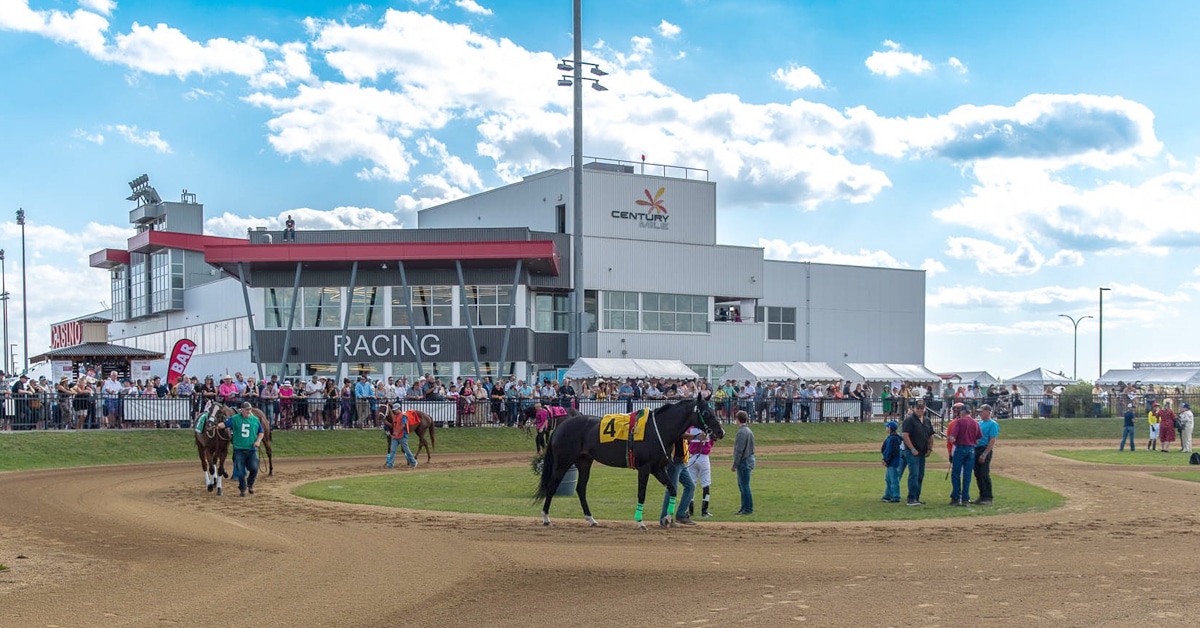
British Columbia horsepeople have taken their knowledge, horses and relationships to Alberta, Manitoba, Ontario and Washington. Diocles moved to Century Mile in Edmonton to prepare for his five-year-old campaign. Woodrow joined prominent Alberta connections. The horses keep moving, and the people move with them. That may be the most important part of Angel’s legacy.
Her record tells us that she won five races and earned $115,529. Her produce record tells us that she became the dam of two stakes winners. Those accomplishments matter, but they do not fully explain why she was special. Angel brought breeders, trainers, riders, owners and family members into one another’s lives. She carried the memory of people who had died and introduced the family to people they might never otherwise have known. Through her foals, she created new partnerships and sent old friendships in new directions. That is one of the quiet gifts horses give us.
They require people to gather around them. They connect generations, families and communities. They give people reasons to meet at the barn before sunrise, stand together beside a sales ring and find one another in the winner’s circle. The Johnson family thought they were buying a racehorse when Ken raised his hand at the 2006 yearling sale. What they were really buying was the beginning of nearly 20 years of friendships, stories and shared experiences. My Special Angel’s life was never hers alone. No horse’s life truly is.
The Latest