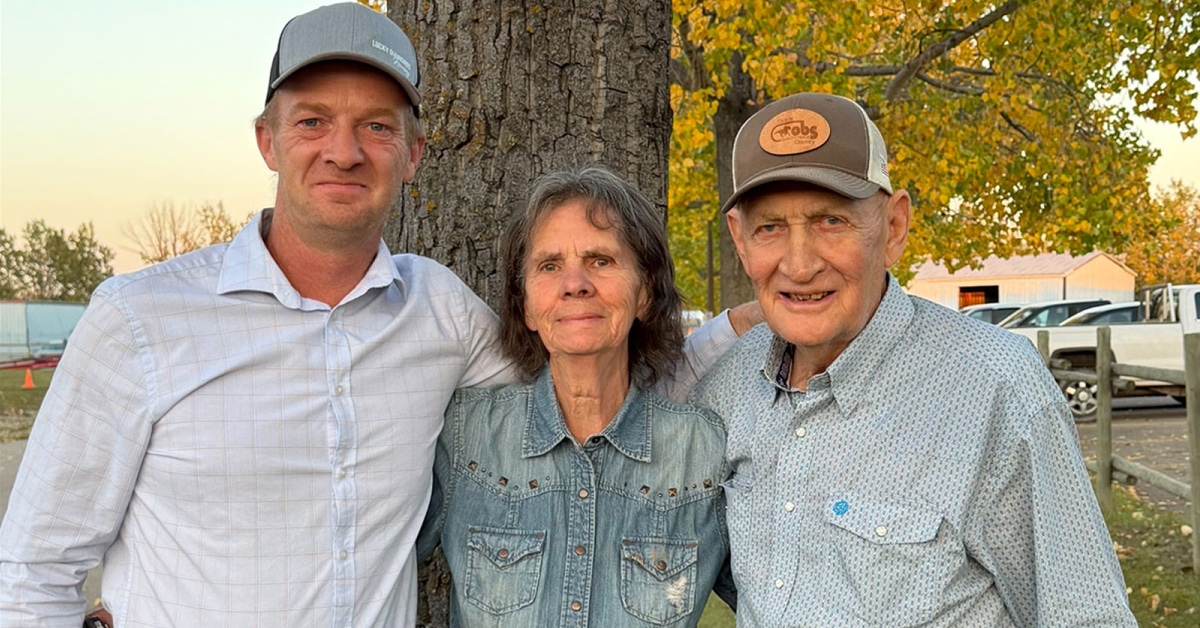
This past April, longtime Ontario owner/breeder Carlo Tucci was relaxing at home when he finally got the phone call he’d been waiting more than 20 years for.
When he answered and Woodbine trainer Catherine Day-Phillips was on the other end, he thought nothing of it, having no idea what it could be about. But after exchanging quick pleasantries, Day-Phillips revealed the true reason for the call: One for Rose, the one-time claimer turned champion Carlo campaigned with his nephew Lou, had been selected for induction into the Canadian Horse Racing Hall of Fame.
The news left him speechless, at least momentarily.
“I had a lump in my throat, and I had a hard time coming out with the first few words after she told me,” Carlo Tucci said. “It’s been a long time coming, I mean, talk about a Cinderella story. I don’t think you could write it any better than what she gave us as a racehorse.”
When One for Rose retired in the fall of 2005, following her third consecutive victory in the Algoma Stakes, the six-year-old seemed like a shoo-in for Canadian Horse Racing Hall of Fame enshrinement. Furthering her case, the hulking mare also captured her third straight Outstanding Older Female title at the Sovereign Awards that December.
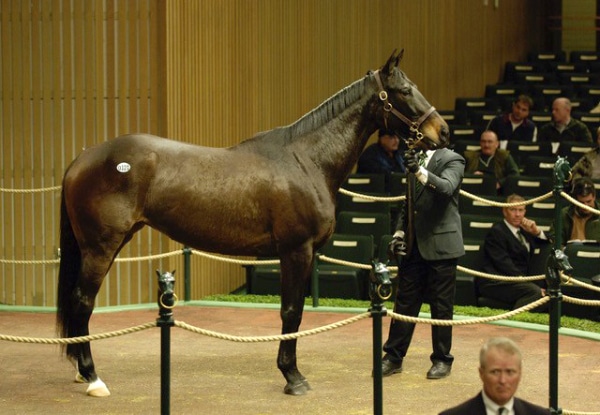
One for Rose sells for $875,000 USD at the 2006 Keeneland January Mixed Sale. (Anne M. Eberhardt photo)
What Carlo soon discovered, however, was that championing their champion for Hall of Fame selection would not be as easy as many of her 15 career victories had been.
“For those first three to five years I was in a real hot campaign,” Tucci said. “I nominated her, I’d write letters, I posted on Facebook. I was trying my best to cheer her on and get the support I thought we needed. I honestly gave up a long time ago, and came to a peaceful point in my life where I realized, hey, it might not happen.”
As unlikely as it was beginning to seem, perhaps the wait was fitting, given that a career as improbable as hers had emerged so unexpectedly from such modest beginnings.
In the mid-1980’s Lou Tucci was brought into owning racehorses by his uncle, Al Tucci (Carlo’s brother), and together they achieved minor success with cheap claimers. In 1986, the late Tony Mattine bought Al and Lou a yearling, later to be named Drone Counsell, at the Ocala Breeders’ Sales August Yearling Sale for $7,500 USD. That purchase gave Lou his first taste of stakes success as an owner, defeating race favourite and future Ontario stallion Highland Ruckus, in the 1988 Friar Rock Stakes at Woodbine.
Sadly, Al passed away later that year at the age of 43.
Carlo, six years Lou’s senior, had frequented the races as a teenager with his brother Al, but didn’t take the plunge into horse ownership until he convinced Lou to get back in the game after a short time away. In 1995, they claimed Ridgeway Jig with trainer John Wilson for $6,250 at Fort Erie, forming a partnership that, more than 30 years later, is still going strong.
A few years later, with horses owned both together and separately, they hired Sid Attard to be their primary trainer. As their operation grew, the Tuccis eventually consolidated their horses and began racing under the name Tucci Stables.
On May 26, 1999, Saucyladygaylord, by Lord Gaylord, gave birth to her fourth foal, a dark bay filly from the first crop of 1995 Kentucky Derby runner-up and millionaire Tejano Run, at breeder Glenn Sikura’s Hill ‘n’ Dale Farm in King City, Ontario. Having competed mostly in claiming races during her own 31-race career, Saucyladygaylord was a seven-time winner with just under $95,000 USD in lifetime earnings. Of her three previous foals, two were winners, but neither had achieved any significant success.
A little over a year later, the filly was catalogued for sale at the 2000 Canadian Breeders Sales September Select Yearling Sale held at Woodbine, where she was assigned hip number 215. Sikura distinctly remembers her as a good-looking yearling, although there was little to suggest what she would ultimately become, especially given her unassuming pedigree.
“I remember her as a good-sized yearling,” Sikura said. “She was definitely an athlete, and moved really well, but she wasn’t pretty per se, she wasn’t very elegant.”
Nevertheless, when she went through the ring and the gavel dropped, Mark Stubbs, under his racing name Stubbs Investments, signed the $15,000 ticket.
Sent to future Canadian Horse Racing Hall of Fame trainer Josie Carroll, One for Rose didn’t make it to the races during her juvenile campaign and first appeared on an overnight the following year, entered for a maiden $40,000 claiming race on October 4, 2002.
That same day, Lou visited Attard at his barn, and told Sid there was a filly in the first race he and his uncle would like to take a look at. Lou wasn’t able to stick around, so he signed the claim slip and trusted Attard to do his thing.
“Well, the funny thing is, we were looking for a horse to claim, because we had lost a couple,” Lou Tucci remembers. “I saw her (One for Rose) entered and told Sid to take a look at her, if she looked good, put the slip in and let’s take a shot.”
Attard and his groom Chris Simpson went to the paddock, slip in hand, and waited for One for Rose to arrive. At first glance, Attard admits he wasn’t sold on claiming her.
“She was so big, almost too big,” Attard said. “I thought she might be a plodder, clumsy, and too hard on herself. I was thinking of passing on her when Chris said to me, ‘Sid, she’s 6/5, and it looks like they really like her.’”
With no time to spare, Attard took off running for the jockey’s room to drop the slip before it was too late, making it just in time.
“Without that push from Chris, I really don’t think we would have gone for her,” added Attard.
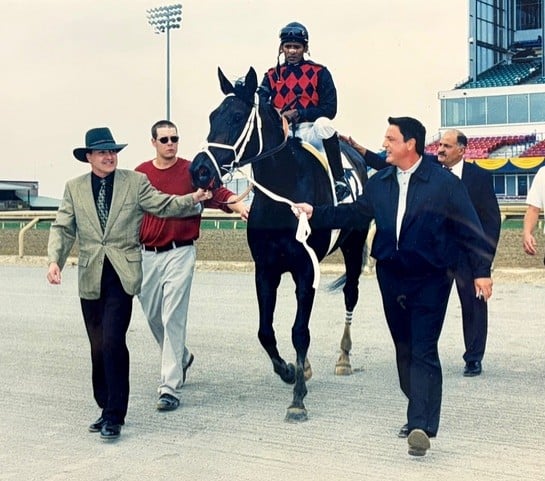
One for Rose being led into Woodbine’s stakes winner circle for the first time in her career after winning the 2003 Algoma Stakes. (L-R: Lou Tucci, Chris Simpson, Emile Ramsammy, Carlo Tucci, & Sid Attard). (Photo courtesy Sid Attard)
Breaking from the outside post as the favourite under jockey Ray Sabourin, One for Rose — the only unraced horse in the six-horse field — settled off the early pace before her big, bounding strides carried her into second after the first half-mile of the 1 1/16-mile contest. At the quarter pole, she was head-and-head with Asfarasyoucansea and jockey Robert Landry, who had led to that point. When they straightened for home, One for Rose, albeit greenly, took over the lead and drew clear to win by 1¾ lengths.
The victory impressed not only the Tuccis and Attard, when approximately an hour later, One for Rose’s now previous trainer, Josie Carroll, approached Attard offering to buy the filly back on behalf of her owner, who had named the filly after his wife. The Tuccis declined the offer, even more convinced they may have claimed a good one.
After a third-place finish in allowance company for her new connections with Sabourin aboard, One for Rose received a new pilot in top jockey Emile Ramsammy, beginning a partnership that would endure for 20 of her remaining 25 career races. Third in that initial race together, Ramsammy and “Rosie” won the final start of her sophomore season by two lengths in a 1 3/16-mile allowance race before she was sent to the farm for a winter break.
When she returned to Attard’s barn the following spring, the now four-year-old was even bigger, stronger, and about to begin a three-year run no one could have seen coming. The 2003 season was truly One for Rose’s coming out party, as she finished the year with six wins and two seconds in 10 starts, including a 9½ length romp in the Algoma Stakes and 6¼ length victory in the 1 ¼-mile Grade 3 Maple Leaf Stakes. Earning $476,377 in purses, she was the voters’ overwhelming choice as Canada’s Champion Older Female.
And just as she was in the midst of becoming racing’s newest superstar on the track, it was her presence in the barn that left an equally lasting impression on her groom, Chris Simpson.
One for Rose breaks her maiden at first asking on October 4, 2002:
“She was just a remarkable animal,” Simpson remembers. “She had her routine. She wanted to be the first one to go out to the track in the morning. I had to groom her by a certain time; she would eat her lunch and lay down. She just had a very different personality that I never really saw with another horse.”
The Rose continued to bloom in 2004, winning four of eight races, with two seconds and $489,832 in earnings. Seven of those eight starts came in stakes company, including victories in the Ontario Matron Handicap, Seagram Cup, where she defeated males, and her second straight Algoma Stakes.
The ‘One for Rose show’ also took to the road that year, finishing a respectable fourth in the Grade 1 $500,000 Overbrook Spinster at Keeneland, 7¼ lengths behind Azeri, the 2002 Breeders’ Cup Distaff winner and Eclipse Award winner as Champion Older Female and Horse of the Year. Azeri went on to repeat as Champion Older Female in 2003 and 2004 before being inducted into the National Museum of Racing and Hall of Fame in 2010.
Back at Woodbine, One for Rose capped her season with a repeat victory in the Grade 3 Maple Leaf Stakes by 6½ lengths, a win that pushed her career earnings past the $1 million mark en route to a second Sovereign Award as the nation’s Outstanding Older Female.
Now the undisputed queen of the Canadian distaff division, One for Rose entered her six-year-old campaign in 2005 with one final chapter to write in her remarkable racing career. Despite facing the starter just 22 times to that point, her connections were mindful of the effects Father Time takes on any equine athlete, opting to space her races fewer and farther apart.
She began that final season with a second-place finish in the Grade 3 George C. Hendrie Stakes before winning the Ontario Matron for the second consecutive year, followed by another trip south of the border, where she finished fifth in the Grade 2 Molly Pitcher Breeders’ Cup Handicap at Monmouth Park in New Jersey. The big mare bounced back, however, beating the boys again with a repeat victory in the Grade 3 Seagram Cup in her penultimate start before ending her illustrious career with a game head victory in her third straight Algoma Stakes.
The hope was for One for Rose to attempt a third consecutive victory in the Maple Leaf Stakes that November, but a small splint appeared and her connections felt there wasn’t enough time to properly treat the ailment and prepare her for a 1 ¼ mile race. Instead, the decision was made to retire her.
One for Rose finished that final season with three wins and one second from five starts, collecting another $274,120 in purse money. In 27 career starts, she amassed 15 victories, including nine stakes wins, five seconds and two thirds, earning $1,321,363 USD.
Talk about one of your all-time public auction bargains!
Her accomplishments made her the first — and to date, the only — horse to win the Champion Older Female title three times, with her third straight Sovereign Award coming at the end of that final season.
At the time, the Tuccis had not yet ventured into breeding, as they would in the years that followed, so they decided to offer One for Rose at the 2006 Keeneland January Mixed Sale. Given her impressive résumé, her owners were optimistic their prized mare could bring somewhere in the ballpark of $500,000 USD.
It was bittersweet to part with such a once-in-a-lifetime horse, but the decision also presented the uncle-and-nephew with a great opportunity.
“It was a way to fund Tucci Stables,” Carlo said. “It was always our intent to put all the money she earned back into the industry, either at sales, buying horses privately, or by claiming. Selling her allowed us to continue to grow.”
Consigned by Three Chimneys Sales, the bidding quickly soared past half a million before reaching a final price of $875,000 USD — the highest price of the day. Bloodstock agent Aki Kato, who purchased her on behalf of Japanese owner Isami Nakamura, told BloodHorse’s Deirdre Biles, “She looks pretty; she’s gorgeous, and she’s sound,” adding, “It (the price) was a little bit higher than we thought it would be, but she was the best one here today.”
Shipped to Japan to begin her new career as a broodmare, One for Rose would once again exceed all expectations, producing two millionaires with her first two foals: multiple Group winner Lady Alba Rosa (JPN) ($2,223,682 USD) and multiple Group winner Quatre Feuilles (JPN) ($1,902,919 USD). Her fifth foal, Angel Face (JPN), would become a third Group winner, earning $611,476 USD in Japan.
Quatre Feuilles would go on to produce a multiple Group winner and millionaire of her own, Argine (JPN) ($1,546,418), who in 2025 finished sixth in the Grade 1 FanDuel Breeders’ Cup Mile at Del Mar in her lone North American start.
In all, One for Rose produced eight foals, five winners of 18 races and $5,073,099 USD in purses, extending her extraordinary legacy well beyond her own racing days.
Reflecting on a life and multiple careers in which she achieved the unimaginable, the significance of her Hall of Fame induction cannot be overstated by those lucky enough to have been around her when her star shone brightest.
“She put us on the map,” Lou Tucci said. “If it wasn’t for her, I don’t think we would have the record we have. We did a few things before her, but not a lot. She made us a top 10 owner at Woodbine, and that says it all for us because she wasn’t just a horse that won races. She really helped us get in the game in a bigger way.”
While Carlo Tucci believes One for Rose’s talent and heart were behind her ability to achieve such greatness, he considers another factor equally deserving of credit: her trainer.
“You know, you have a Hall of Fame trainer, and the truth is, Sid always took great care of her, and he always had her ready,” Carlo said.
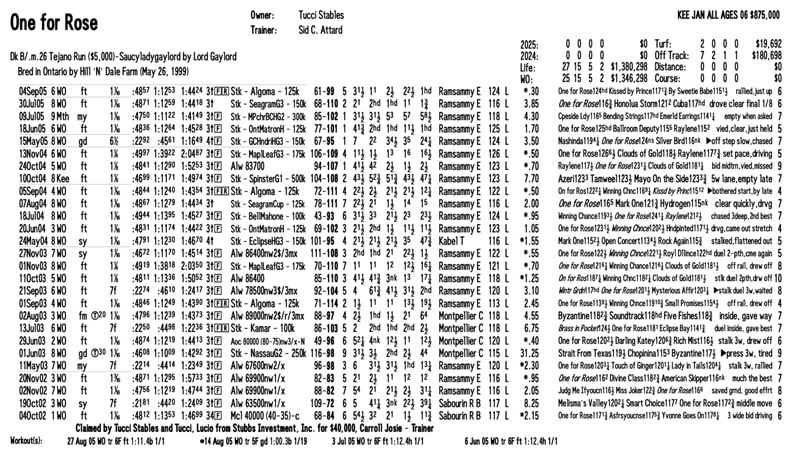
It’s a sentiment echoed by her groom, who likely spent more time with the mare than anyone involved, witnessing firsthand Attard’s management of their stable star on a daily basis.
“Sid was such a big part of her success,” Simpson said. “He did such a great job, he was so patient with her and I don’t think in a lot of other stables she would have accomplished what she did.”
And although he’s trained numerous champions in his more than half-century career, One for Rose is especially significant to Attard. Not only was she the first of three horses he would claim for $40,000 to earn more than $1 million under his tutelage — the others being Just Rushing and Stunning Stag — but she’s also his only multiple champion, his highest money earner, and now the first horse he’s trained to be inducted into the Hall of Fame.
“It means a lot, she was just so special,” Attard said. “When you claim a horse for $40,000, you never imagine they’re going to turn into what she did. She always gave everything she had every time she raced; she really deserves this.”
After two decades, the wait is finally over. One for Rose has taken her rightful place among the sport’s greatest names, giving this Cinderella story its true fairy-tale ending and forever immortalizing her in Canadian racing history.
The Latest