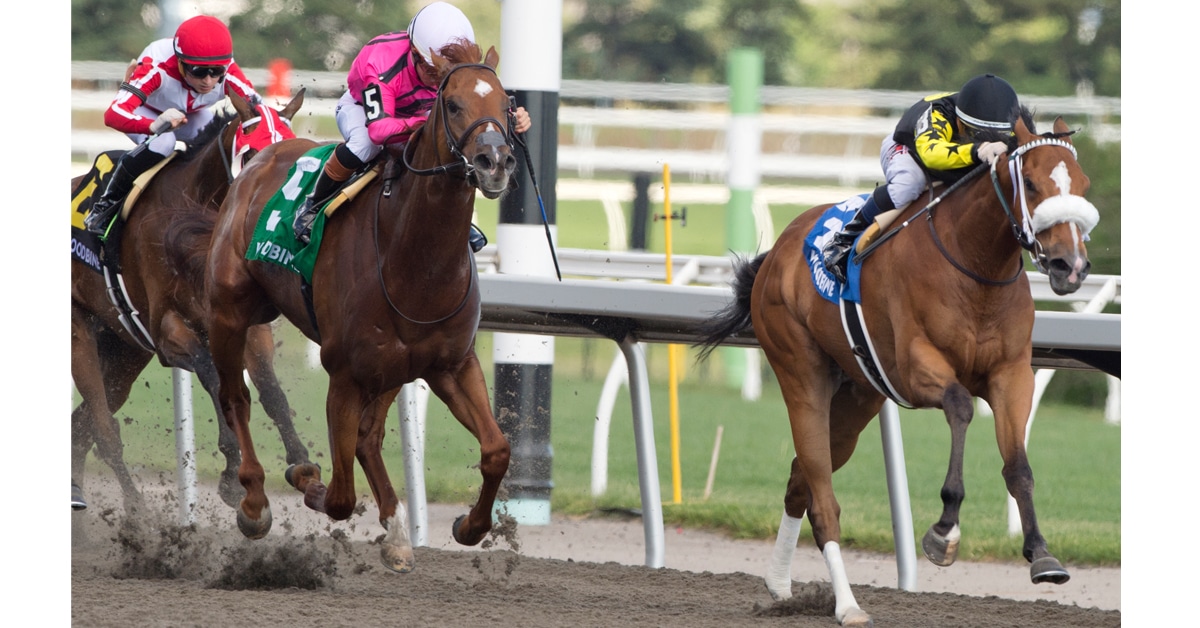
Ontario’s racing industry is facing a critical moment as a long-anticipated $35 million funding agreement remains stalled, exposing divisions within the sport and raising urgent questions about who controls the future of racing in the province. What was expected to be a transformative investment in purses and breeding incentives has instead become a flashpoint, with breeders, racetrack operators, and horsepeople now openly at odds as the delay stretches into the heart of the 2026 season.
At issue is the proposed amendment to Ontario’s long-term funding agreement, administered through Ontario Racing. The amendment includes a $35 million increase per year over five years intended to support purses, breeder awards, and broader industry programs across all three breeds. The funding was the result of a two-year process led by Ontario Racing, culminating in a deal that industry stakeholders believed had been finalized.
According to David Anderson, president of the Canadian Thoroughbred Horse Society, the agreement had already received support across the industry before the current delay. “The board of Ontario Racing overwhelmingly voted in favour of allocating the funding including all breeds, all associations, and all racetracks with the exception of Woodbine,” Anderson said. Despite that consensus, the agreement remains unsigned. The delay, Anderson says, comes down to one issue. “The way the long-term funding agreement is structured basically gives Woodbine Entertainment veto power, and that’s what they’re doing.”
That claim goes to the heart of the current conflict. While the funding itself has been negotiated and approved at the government and industry level, final execution requires sign-off from all parties, and that process has stalled.
According to Anderson, the original intent of the additional funding was clear. “The mandate was to put the money into the [Horse Improvement Programs] as much as we possibly could, but then Woodbine stepped in and said they needed some for their own operational shortfalls,” said Anderson.
At the centre of the delay is a disagreement over how the $35 million should be distributed and, more specifically, whether a significant portion should be directed toward thoroughbred racetrack operations. Anderson noted that Woodbine is requesting almost half of the $35 million, money that would otherwise flow directly into purses and breeder awards. “That’s coming directly out of purses and breeders’ awards for all breeds,” Anderson concluded.
The stakes are significant. In a letter to Ontario’s Premier Ford and MPP Cho, the Minister of Tourism, Culture and Gaming, the CTHS has warned that the funding is “critical to sustaining the livelihoods of breeders and supporting the long-term viability” of the industry, which supports more than 35,000 jobs across Ontario. Much of that employment exists in rural communities, on farms and in supporting industries that rely on breeding and horse production rather than racetrack operations. That distinction has become a defining element of the debate.
“We are the factory. We are the industry foundation. We are where the jobs are. We are the ones creating the jobs and we are where all the spinoff jobs come from,” said breeder Arika Everatt of Shannondoe Farm. “And we are suffering.”
Woodbine’s Position
Woodbine provided the following statement about the contract negotiations:
“Woodbine Entertainment’s sole mandate is to support and grow horse racing in Ontario, and that responsibility guides every discussion we have with government and our industry partners.
We understand and share the desire to see additional investment flow into the industry as quickly as possible. We all want the same outcome: a strong, successful future for horse racing in Ontario that benefits participants across every sector.
Discussions are ongoing and constructive, and remain focused on strengthening the industry’s long-term financial foundation. We appreciate the continued support and engagement from government, as well as the input and advocacy from industry stakeholders.
We are committed to working collaboratively to reach a resolution and look forward to advancing a path forward together in the near term.”
Though they don’t detail their position, its broader argument is well understood within the industry. Operating a major racetrack requires significant capital, and maintaining a viable racing circuit is essential to the health of the entire system. Without a racetrack, there is no place for horses to run. In fact, because of these concerns some other standardbred racetracks are scheduled to receive money as part of the funding agreement.
Anderson rejects that argument outright. “If I own a racetrack and I’m sitting on huge reserves with no debt, I hardly feel like I’m in a position to say that I’m suffering,” he said. He contrasts that with what he describes as the reality facing breeders. “When I speak to my members, every single one of them is suffering. We’re dying on the vine,” he said.
Sue Leslie, president of the Horsemen’s Benevolent and Protective Association of Ontario, emphasized that the funding was always intended to support the entire industry rather than a single group.
“The intention of that increased funding was to help all of the industry, but in particular the horsepeople and breeders and particularly purses,” Leslie said.
She noted that the agreement followed extensive negotiations and that while compromises were made, the overall framework had broad support. “We didn’t get everything we wanted, but I think the government understood and they’ve been generous.”
Leslie also pointed out that the funding applies across all breeds and will ultimately be distributed by Ontario Racing, reinforcing that the issue is not simply about thoroughbred racing but about the health of the entire provincial system. “From my perspective, and I’ve been totally involved with all meetings, I’m on the executive, I believe this will get worked out,” she concluded.
Impact on Breeders
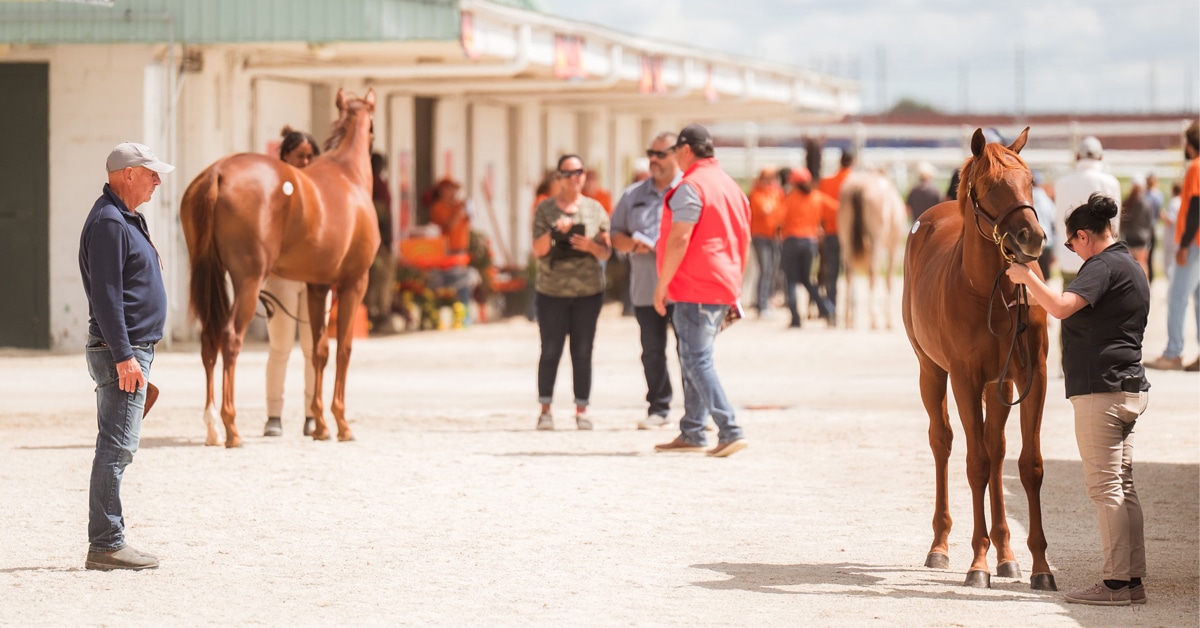
What makes the delay particularly concerning is its timing. Breeding season is already underway, racing has begun, and yearling sale preparations are in motion, all without clarity on purse structures or incentive programs.
“We’ve missed breeding season because of it. Racing season has started and we don’t have the funding. We’re starting to enter yearlings for the fall sales and we don’t have a story to tell,” Anderson said.
That lack of a “story” is critical in a sales-driven industry, where buyer confidence depends heavily on the strength of incentive programs. The ripple effects are already being felt. Some breeders are adjusting their operations, breeding elsewhere, and shifting horses to other jurisdictions where incentives are clearer and more stable, further eroding Ontario’s competitive position.
“The last couple years, we’ve gone to the sales, and being an Ontario-bred has actually been a hinderance where we were once the poster child for state-bred programs,” said Everatt who says that the funding is needed to support breeders. “Woodbine has decimated the Ontario-bred races, Ontario-sired races, and Sales Stakes which is forcing local breeders out of the business.”
“For 15+ years we have been listening to this rhetoric that the development on the property is going back into the horsemen’s pockets but we haven’t seen a nickel,” said Anderson. “Purses have remained the same while restricted races have been cut drastically. When are we going to see investment in the horse people? Where is the net generation revenue and profit from ongoing development being allocated and what does it look like going forward for the horse people? There is no transparency which the breeders and owners need for long-term security and planning.”
The issue has now reached the provincial legislature. Niagara Falls MPP Wayne Gates raised concerns about the impact of the delay on racetrack communities, particularly Fort Erie Racetrack.
“For over a century, this track has supported good local jobs… but today its future is at risk,” Gates said, calling on the government to finalize the agreement and protect workers. His comments highlight the broader economic implications of the dispute, extending beyond breeders and owners to include racetrack employees and local economies that depend on racing.
An Industry at a Breaking Point
What has emerged is a clear and increasingly public divide over the future of Ontario racing. Breeders argue that without strong incentives, there is no reason to invest in Ontario-bred horses, ultimately reducing supply and weakening the entire system. Racetrack operators point to the need for financial sustainability and infrastructure investment.
What unites all sides is urgency. “This is our only chance,” Anderson said bluntly.
With decisions being made now that will shape the industry for years to come, the outcome of this dispute will determine not only how $35 million is distributed, but whether Ontario Racing can regain the stability and competitiveness it has struggled to maintain. For now, the industry waits, caught between opportunity and uncertainty while discussions are ongoing.
The Latest